Introduction
By the end of 2026, data accountability will have become a core business discipline. Analytics now influences strategy, pricing, customer experience, hiring, and risk decisions. When data is misused, poorly governed, or ethically flawed, the consequences are no longer theoretical; they affect trust, reputation, and long-term value.
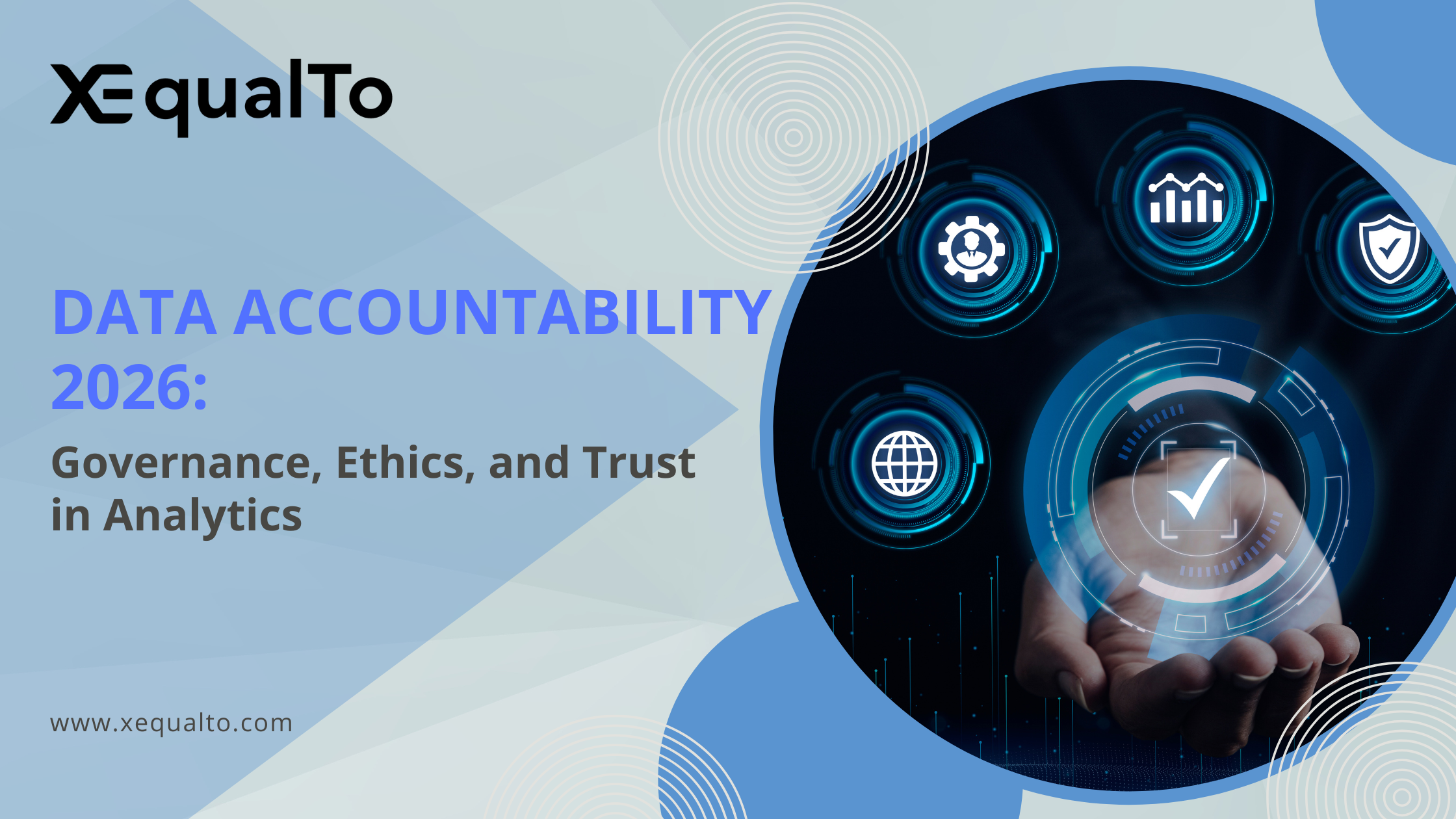
Data accountability brings together governance, ethics, and trust into a single operating mindset. It ensures that data is accurate, responsibly used, and transparently managed across the analytics lifecycle.
Why Data Accountability Matters in 2026
Analytics is no longer confined to reporting teams. It powers automated decisions and AI-driven systems that act at scale. This shift raises a critical question: who is responsible when data-driven decisions cause harm or fail?
Recent industry and regulatory attention indicate that organizations can no longer rely solely on technical excellence. Inaccurate data, biased models, or unclear ownership can quickly lead to regulatory scrutiny and loss of stakeholder confidence. Accountability is what turns analytics from a risk into a reliable asset.
Governance: From Control to Clarity
Traditional data governance focused heavily on policies, approvals, and compliance checklists. While necessary, these approaches often slowed teams down without improving outcomes.
Modern governance in 2026 emphasizes clarity over control:
- Clear ownership: Data products, datasets, and models have named owners responsible for ensuring quality, accessibility, and responsible usage.
- Lifecycle governance: Accountability spans collection, transformation, analytics, AI models, and downstream decisions.
- Embedded controls: Quality checks, lineage, and access policies are automated and integrated into platforms, not enforced manually.
This shift allows organizations to scale analytics while maintaining confidence in how data is used.
Ethics: Making Responsibility Operational
Ethics in analytics is no longer abstract or optional. It is operationalized through standards, reviews, and decision checkpoints.
Key ethical priorities in 2026 include:
- Fairness: Actively identifying and mitigating bias in datasets and models.
- Transparency: Ensuring stakeholders can understand how analytical conclusions are reached.
- Consent and privacy: Respecting how data is collected and used, especially in AI-driven systems.
Leading organizations now treat ethical review as part of the analytics delivery process, similar to security or quality assurance. Some have introduced formal roles and committees to oversee responsible data and AI use across the enterprise.
Trust: The Outcome That Matters Most
Trust is not created by a single policy or tool. It is the cumulative result of consistent, accountable behavior.
In analytics, trust depends on:
- Data quality: Accurate, consistent, and well-documented data.
- Explainability: Clear explanations for models and metrics used in decisions.
- Traceability: The ability to audit how data moved, changed, and influenced outcomes.
When trust is strong, business leaders rely on analytics with confidence. When it is weak, even correct insights are questioned or ignored.
What Leading Organizations Are Doing Differently
High-performing organizations in 2026 share several accountability practices:
- They define accountability early, before analytics and AI systems are deployed.
- They align governance with business outcomes, not just compliance.
- They invest in documentation, metadata, and communication, not only technology.
- They treat accountability as a leadership responsibility, not an IT task.
These practices reduce risk while enabling faster, more confident decision-making.
Conclusion
Data accountability in 2026 is about earning and sustaining trust at scale. Governance provides structure, ethics provides direction, and trust is the result.
Organizations that embed accountability into their analytics culture will not only meet regulatory expectations, but they will also make better decisions, move faster with confidence, and build lasting credibility in a data-driven world.